When Betrayal Cuts Deep: Finding Hope for Pain, Trust, and Forgiveness
By Pastor John Haggard
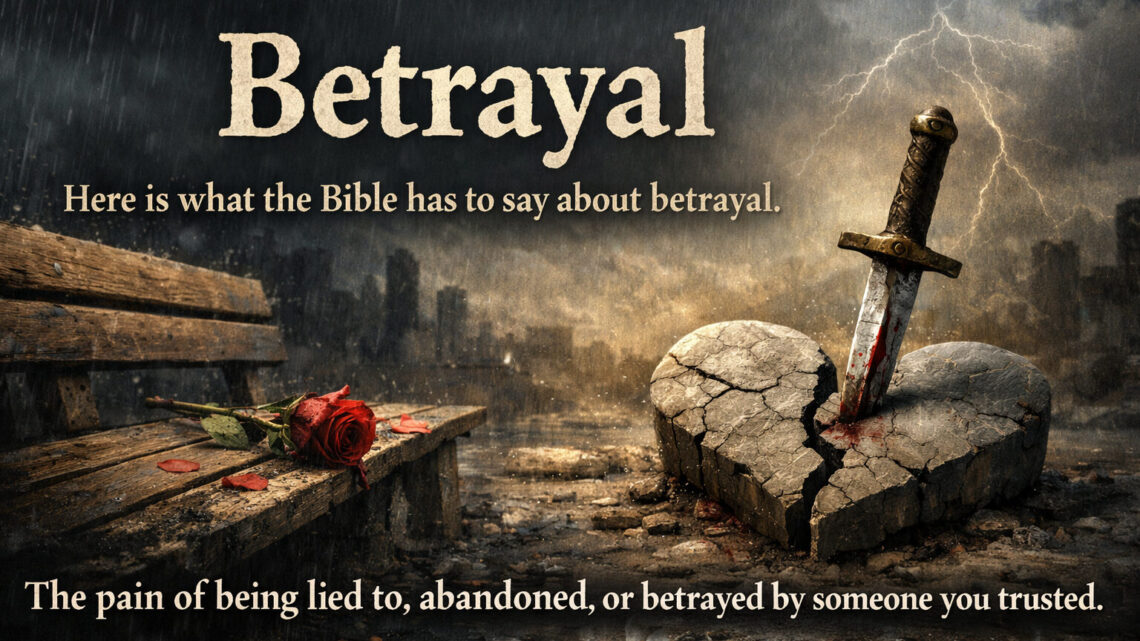
Betrayal is one of the deepest emotional wounds a person can experience. It comes when someone you trusted — someone you thought was a friend — lies about you, turns on you, abandons you, or harms you in a way you never expected. That kind of pain does not fade quickly. It can leave you angry, guarded, suspicious, and wondering if you will ever trust anyone again.
Scripture doesn’t minimize it — and it doesn’t leave you there either.
What Does Scripture Say About Betrayal?
Before we begin, we must understand something foundational about Scripture itself. The Bible is not human opinion. It is God’s revealed truth. The Apostle Peter writes:
2 Peter 1:20–21 (LSB):
Know this first of all, that no prophecy of Scripture comes by one’s own interpretation. For no prophecy was ever made by the will of man, but men being moved by the Holy Spirit spoke from God.
This means Scripture interprets Scripture. Man does not invent truth; God reveals it. Likewise, Paul writes:
2 Timothy 3:16 (LSB):
All Scripture is God-breathed and profitable for teaching, for reproof, for correction, for training in righteousness.
When we talk about betrayal, we don’t turn to psychology or personal opinion. We let God speak by reading what He has to say in his word, the Bible.
The Bible does not minimize betrayal. King David understood it deeply. In Psalm 55 he describes not an enemy attack, but the agony of being wounded by someone close. He concludes with this instruction:
Psalm 55:22 (LSB):
Cast your burden upon Yahweh and He will sustain you; He will never allow the righteous to be shaken.
Psalm 147:3 (LSB):
He is the One who heals the brokenhearted And who binds up their wounds,
Psalm 34:18 (LSB):
Yahweh is near to the brokenhearted And saves those who are crushed in spirit.
Meaning: These verses offer direct solace by inviting you to transfer your emotional weight to God, who promises stability even when human relationships fail.
What Anchors Do We Have When We’re Betrayed?
People may fail you, but Christ never will. God Himself promises:
Hebrews 13:5 (LSB):
I will never desert you, nor will I ever forsake you.
David makes this even more personal:
Psalm 27:10 (LSB):
For my father and my mother have forsaken me, But Yahweh will take me up.
God remains faithful. God does not leave His people.
So what do you do with the anxiety, the anger, the racing thoughts, and even the desire for revenge that betrayal produces?
1 Peter 5:7 (LSB):
Casting all your anxiety on Him, because He cares for you.
We are not told to bury pain. We are told to bring it to God. Jesus Christ is not only the One who understands betrayal — He is the One who endured it perfectly. Scripture says:
1 Peter 2:23 (LSB):
Who being reviled, was not reviling in return; while suffering, He was uttering no threats, but kept entrusting Himself to Him who judges righteously.
Christ entrusted justice to the Father. That does not mean betrayal is excused. It means vengeance belongs to God.
We see this truth powerfully in the life of Joseph. Betrayed by his own brothers, sold into slavery, imprisoned unjustly, and forgotten, Joseph endured thirteen years of suffering before God exalted him to second-in-command in Egypt. When Joseph finally confronted his brothers, he did not deny their sin. He said:
Genesis 50:20 (LSB):
As for you, you meant evil against me, but God meant it for good in order to do what has happened on this day, to keep many people alive.
Four Practical Steps After Betrayal
- Acknowledge your pain honestly. Shallow forgiveness happens when we minimize the harm. Bitterness grows when we deny our grief. God invites honesty.
- Establish boundaries. Forgiveness does not require continued exposure to unrepentant harm. Scripture never commands you to tolerate abuse. Forgiveness releases bitterness; boundaries protect wisdom.
- Move toward forgiveness — not necessarily reconciliation. Forgiveness is your obedience to God. Reconciliation requires repentance from the offender. They are not the same thing.
- Lean into God’s constancy. The Bible says:
Hebrews 13:6 (LSB):
So that we confidently say, ‘The Lord is my helper, I will not be afraid. What will man do to me?’
Betrayal Cannot Define You
Because you belong to Christ, betrayal cannot define you.
What Is Our Own Betrayal of God?
Now let’s look at the most important betrayal of all: our betrayal of God through sin. Every person stands guilty. Scripture says:
Romans 6:23 (LSB):
For the wages of sin is death, but the gracious gift of God is eternal life in Christ Jesus our Lord.
Yet God provided the payment we could never make:
Romans 5:8 (LSB):
But God demonstrates His own love toward us, in that while we were yet sinners, Christ died for us.
Salvation is not earned. The Apostle Paul writes:
Ephesians 2:8–9 (LSB):
For by grace you have been saved through faith, and this not of yourselves, it is the gift of God; not of works, so that no one may boast.
Even repentance is granted by God:
Acts 11:18b (LSB):
“Well then, God has granted to the Gentiles also the repentance that leads to life.”
What Does Full Forgiveness Look Like?
Full forgiveness is free through Christ. But it is not cheap. It was purchased with His blood.
If betrayal has broken your heart, Christ invites you to trust Him. If sin has separated you from God, Christ invites you to repent and believe. He alone heals betrayal, forgives sin, and secures eternal life.
If you feel a stirring in your heart and are wondering, “Would God ever forgive you for what you have done?” it may be the Holy Spirit stirring in you, convicting you of your sin and your need for a Savior.
- Invite Christ into your heart.
- Repent of your sins.
- Believe that He rose from the dead and proclaim Him your Lord and Savior.
Everyone dies a physical death.There is no second chance to accept Christ after you die. All unbelievers go to Hell for eternity. All believers who have accepted Christ live in glory with the Father and the Son for eternity.
Additional Resources for Help
If you’d like more help, more resources, more biblical encouragement, visit us at TreasureTop.com to hear additional messages including:
Learn More
To continue studying what the Bible teaches, you may also enjoy these related articles on TreasureTop:
- What Does It Mean to Be Born Again?
- How Do I Know If I Am Really Saved?
- Do Not Be Deceived: What the Bible Says About False Preachers
- What We Believe
Send Us Your Prayer Request
2 Questions Many Ask
- Am I Truly Saved? Discover the answer — 👉 Click here.
- Why Self-Help Books Don’t Work Long-Term: 👉 Find out. Click here.
Prayer Request?
- If you have a prayer request or comments, 👉 click here.
Find Us Here
- Visit our YouTube channel by clicking here.
- Visit our Facebook page here.
- Subscribe to our audio podcasts:
Scripture quotations taken from the New American Standard Bible 1995® (NASB), Copyright © 1960, 1962, 1963, 1968, 1971, 1972, 1973, 1975, 1977, 1995 and from the Legacy Standard Bible © 2021 by The Lockman Foundation. All rights reserved. www.lockman.org